Acute Low Back Pain Exercises
Early-Stage Recovery Protocol for Low Back Injuries
The Goal: When you have a fresh low back injury, bending your spine forward (like a crunch or sitting slouch) often makes the pain worse because it squeezes the injured disc against the nerve. These three exercises create a "muscular brace" around your spine to protect it while it heals, without requiring you to bend or twist.
Safety Rules:
The "Traffic Light" Rule: If pain is a Green Light (feels good/stretching), keep going. If it is a Red Light (sharp, shooting, or increasing pain), STOP immediately.
Respect the Range: Do not push through pain. If you feel pain halfway through a movement, stop before you reach that point.
1. The Dead Bug
Why this helps a fresh injury: Traditional abdominal exercises (like sit-ups) require you to bend your spine, which acts like squeezing a jelly donut—it pushes the injury further into the nerve. The Dead Bug strengthens your core by teaching it to "brace" (lock tight) while your spine stays perfectly still. This protects the disc.
How to do it:
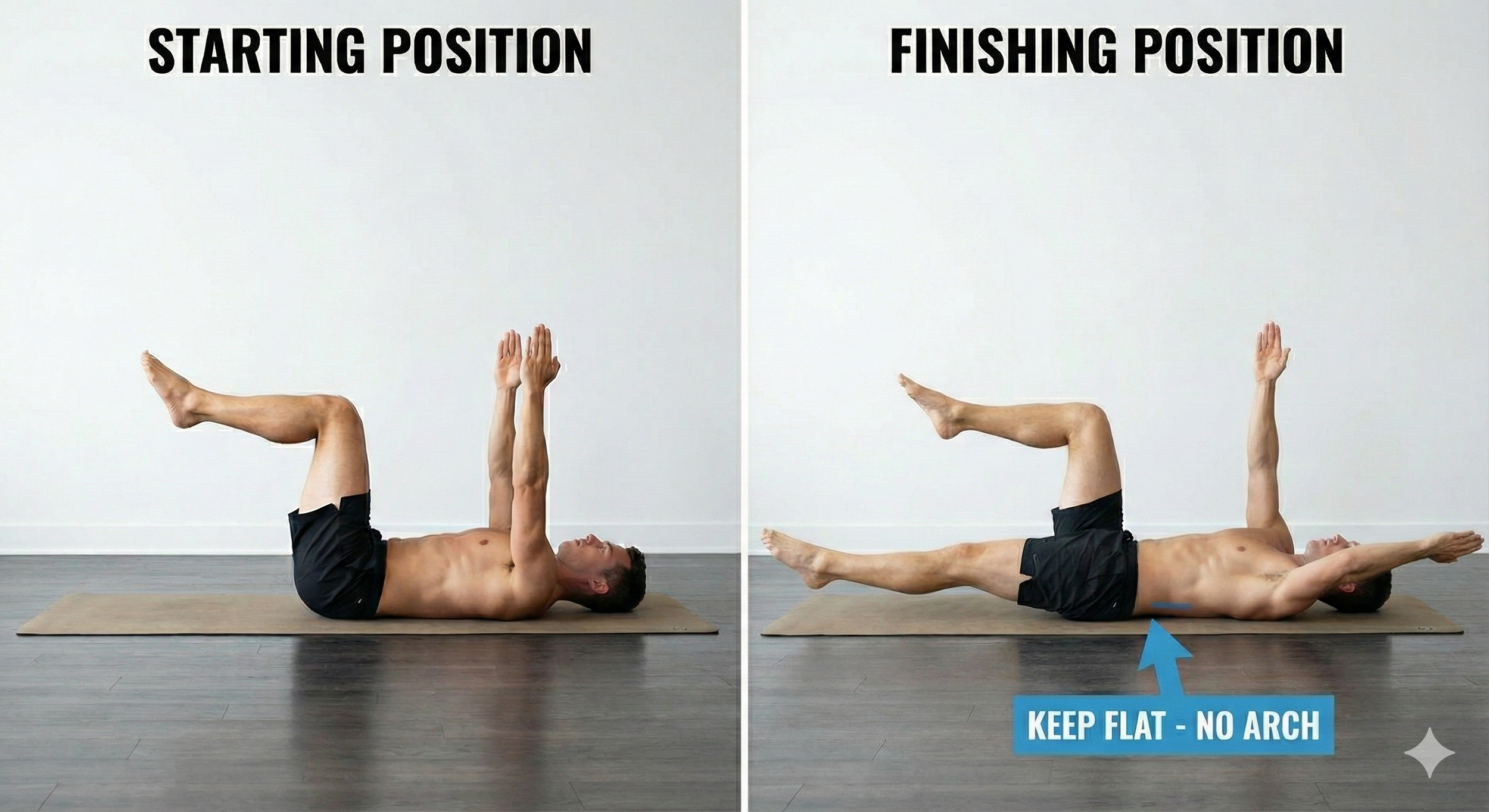
Setup: Lie on your back with your arms extended toward the ceiling and your legs in the air, knees bent at 90 degrees.
The Brace: Take a breath and squeeze your stomach muscles tight (brace your core as if someone were about to poke you in the stomach). You must keep this tension the entire time.
The Movement: While keeping your core tight, slowly lower your opposite arm and opposite leg toward the floor.
The Limit: Only go as low as you can without your back arching or pain occurring.
Return: Bring them back to the start and switch sides.
Prescription: 3 Sets of 10 Reps (Total, alternating sides).
2. The Bird Dog
Why this helps a fresh injury: When you are in acute pain, the tiny stabilizer muscles deep in your spine (multifidus) often "shut down" to protect you. This exercise gently wakes them up without putting heavy weight or compression on your spine. It teaches you to balance without twisting the injured area.
How to do it:
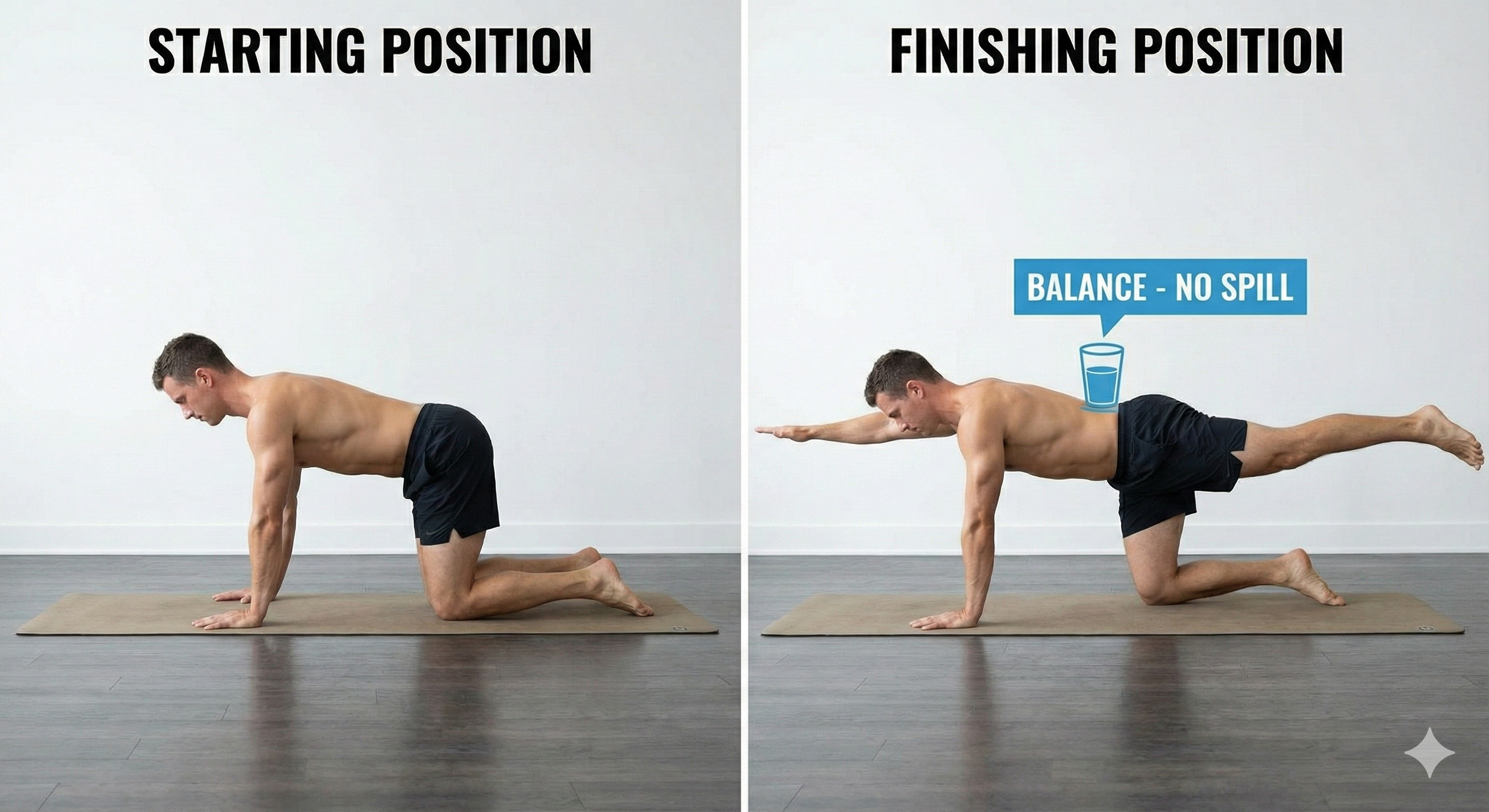
Setup: Start on your hands and knees (hands under shoulders, knees under hips). Your back should be flat like a table.
The Brace: Tighten your stomach muscles slightly.
The Movement: Reach one arm forward and the opposite leg straight back.
The Focus: Focus on making your body "long," not high. Imagine there is a glass of water resting on your lower back—do not let it spill.
Return: Hold for a second, return to the start, and switch sides.
Prescription: 3 Sets of 10 Reps (Total, alternating sides).
3. The Prone Cobra (Extension Bias)
Why this helps a fresh injury: Most disc injuries are aggravated by slouching (flexion). This exercise places your spine in gentle extension (bending backward). For many disc injuries, this position helps "centralize" the disc material—moving it away from the nerve root—while strengthening the glutes and upper back to improve your posture.
How to do it:
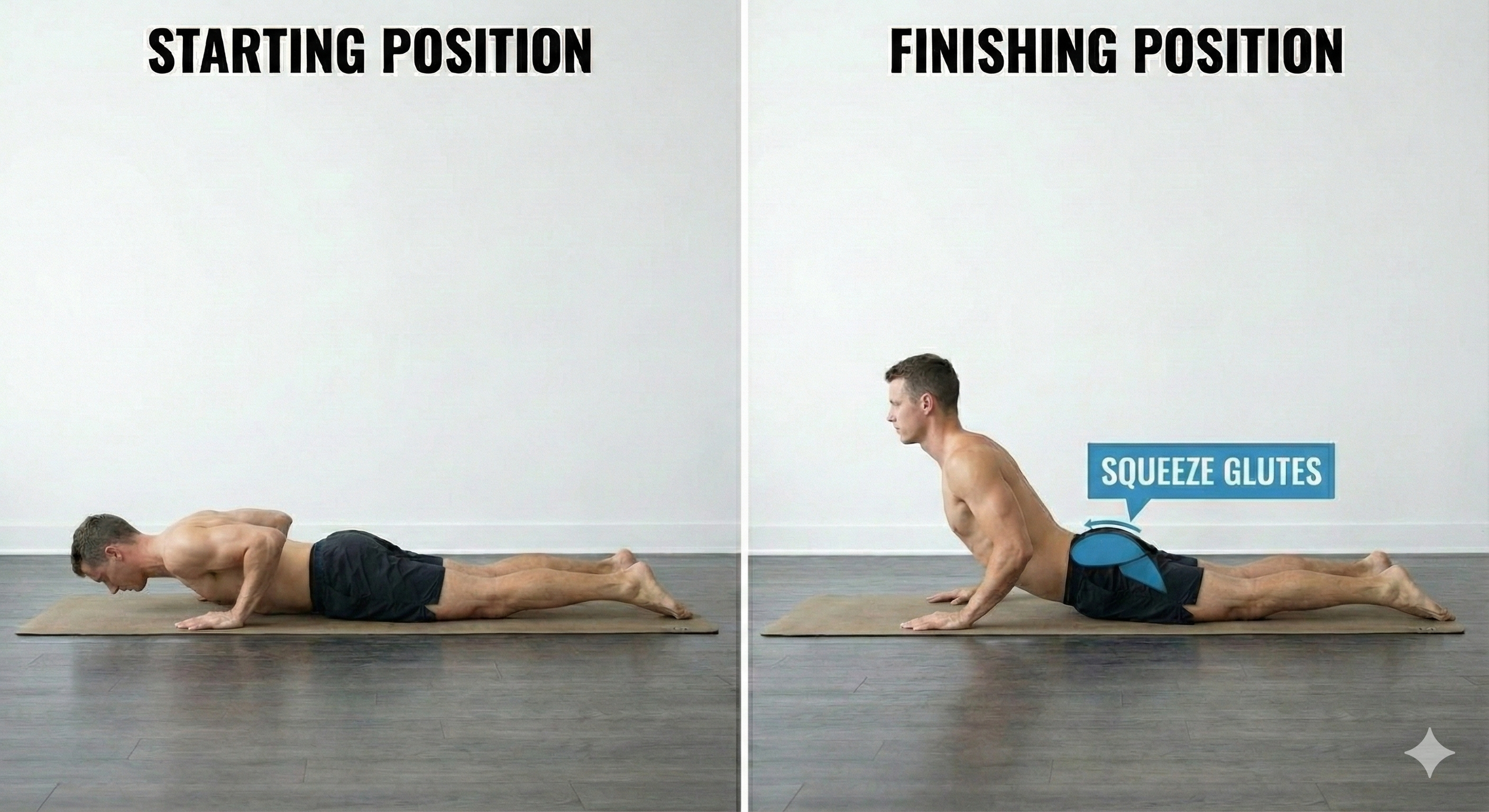
Setup: Lie face down on the floor. Legs straight, arms bent with hands placed on the floor near your shoulders/head (similar to a push-up position, but resting).
The Squeeze: First, squeeze your glutes (buttocks) firmly. This anchors your hips and protects your low back.
The Movement: Pinch your shoulder blades together and gently lift your chest slightly off the floor.
Important: Keep your hands on the ground for support and keep your chin tucked (look at the floor, do not crane your neck up).
Return: Hold for 2–3 seconds, then lower back down.
Prescription: 3 Sets of 10 Reps.