Recovery on the Road: A Parent’s Guide to Helping Young Athletes During Tournaments
By Dr. Norman Eng, DC, CCSP
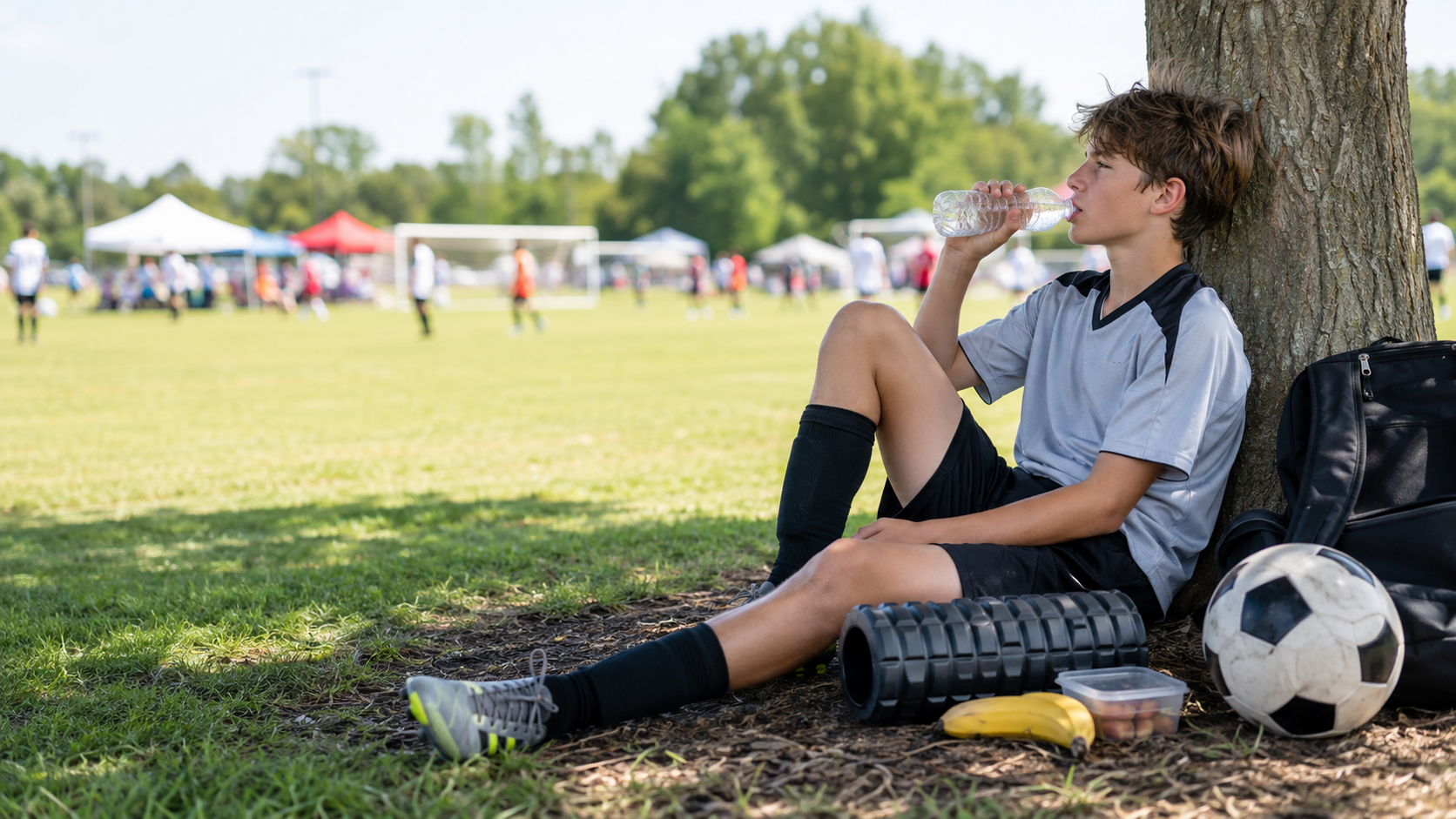
Tournament weekends can be some of the most exciting experiences in youth soccer. Players compete against new teams, spend time with their teammates, and create memories that can last for years. However, tournaments also place unusual demands on a young athlete’s body.
A typical tournament may include a long car ride, a change in routine, unfamiliar food, a hotel stay, hot weather, and multiple games within a relatively short period. Players may finish one game tired and sore but need to compete again later that day or the following morning. Under these conditions, recovery cannot be left to chance.
Recovery is not simply resting after a game. It is the process of restoring the body and mind so an athlete can safely perform, adapt, and enjoy playing again. For young athletes, this process is especially important because they are balancing training and competition with school, travel, social demands, and normal growth and development.
Parents do not need complicated equipment or expensive products to help their children recover. The fundamentals matter most. A useful way to organize tournament recovery is through four steps:
Refuel: Replace fluids, energy, and nutrients.
Rest: Allow the body and mind to recover.
Regenerate: Use light movement and recovery techniques to reduce stiffness and restore comfortable movement.
Reassess: Determine whether the player is ready for the next activity.
Together, these four steps can help families create a practical recovery plan before, during, and after a tournament.
Recovery Begins Before the Tournament
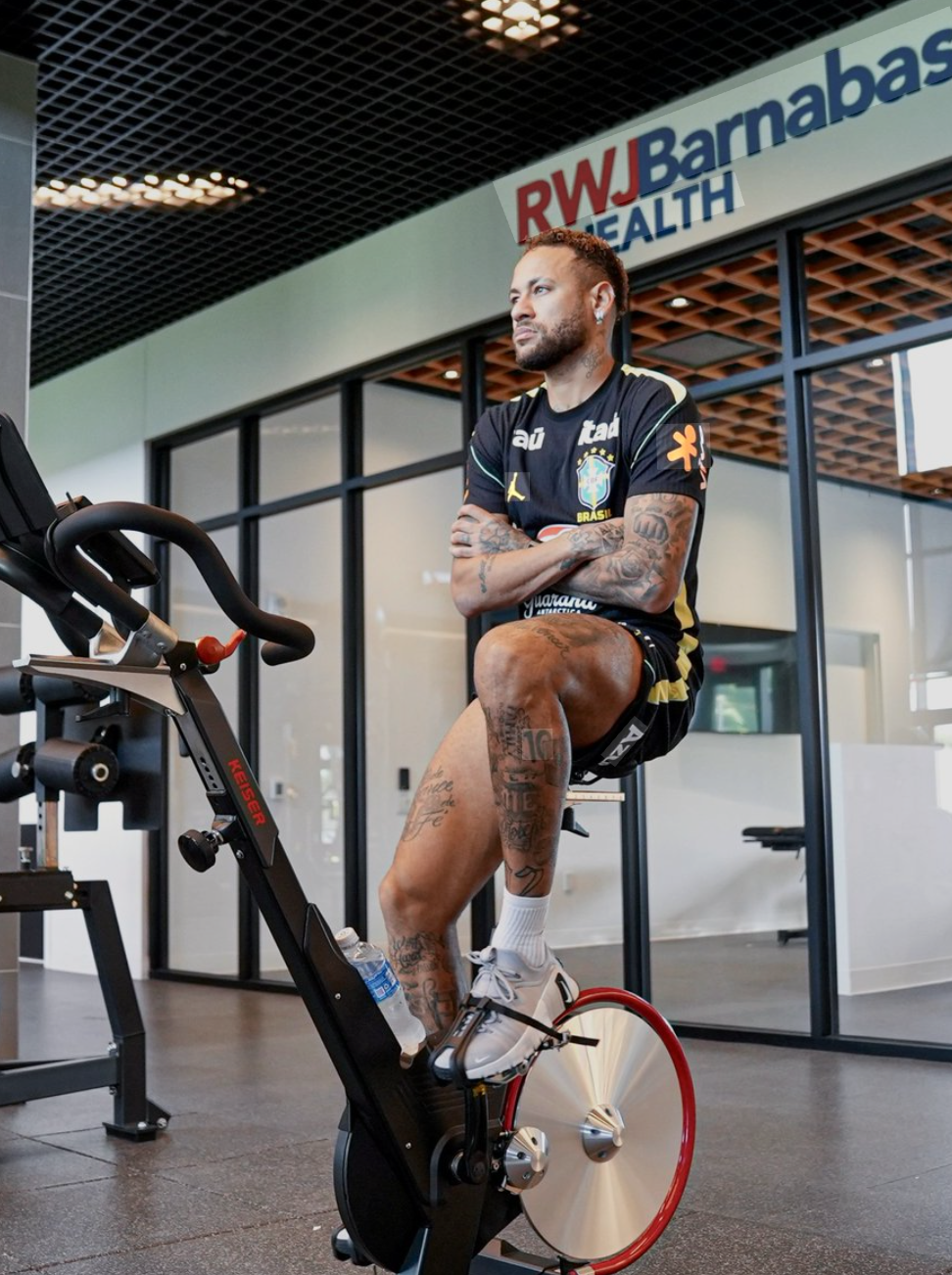
Neymar recovering on an exercise bike.
One of the most common mistakes is waiting until the first game to think about hydration, nutrition, and sleep. A player cannot fully correct several days of poor hydration or inadequate sleep during the warm-up.
Preparation should begin before the team travels.
Hydration deserves particular attention, especially when a tournament will be played in hot or humid conditions. Players should focus on drinking regularly during the 48 hours leading up to the tournament. This does not mean forcing down an excessive amount of water at one time. The goal is steady hydration throughout the day.
Urine color can provide a simple, although imperfect, hydration check. Pale-yellow urine generally suggests reasonable hydration, while consistently dark urine may indicate that the athlete needs more fluids. Parents should also pay attention to thirst, headache, fatigue, dry mouth, and decreased urination.
Water is appropriate for most routine hydration needs. An electrolyte drink may be useful during prolonged activity, heavy sweating, hot weather, or a tournament schedule involving multiple games. Energy drinks are not appropriate substitutes for sports drinks and are generally not recommended for children.
Sleep should also become a priority during the week before the tournament. Players should not enter the weekend already carrying several nights of sleep loss. A late night cannot always be avoided, but families can reduce unnecessary sleep disruption by packing early, planning travel carefully, and avoiding a rushed departure.
Food preparation matters as well. Tournament venues, hotels, airports, and highway exits may not offer the foods a player normally eats before competition. Families should pack familiar snacks and identify possible meal locations before arriving. The best tournament nutrition plan is often the one that prevents parents from having to improvise at the last minute.
Useful travel foods may include fruit, sandwiches, yogurt, pretzels, crackers, granola bars, applesauce, trail mix, and other foods the athlete already tolerates well. Perishable food should be stored safely in a cooler.
During long car rides or flights, players should periodically stand, walk, and move their legs when it is safe to do so. A few minutes of movement can help reduce the stiffness that commonly develops after sitting for several hours.
Eating Before the Game

A young athlete should generally eat a full meal approximately three hours before a game. This provides time to digest while making energy available for competition.
Eating a large meal too close to kickoff may leave a player feeling heavy, sluggish, nauseated, or uncomfortable. At the same time, beginning a game without enough food can contribute to low energy and poor concentration.
A good pregame meal should be familiar and relatively easy to digest. It should emphasize carbohydrates, include a moderate amount of protein, and avoid excessive amounts of fried food, grease, or heavy sauces.
Examples include:
Chicken with rice and fruit
A turkey sandwich with pretzels and fruit
Oatmeal with a banana and yogurt
Eggs with toast and fruit
Pasta with a lean protein and a light sauce
Every athlete is different. Some players tolerate a larger meal, while others need something smaller. Tournament day is not the time to experiment with unfamiliar food, supplements, or a new pregame routine.
If the player becomes hungry closer to kickoff, a small snack may be appropriate approximately 60 to 90 minutes before the game. A banana, applesauce, pretzels, crackers, or a small granola bar may work well. The snack should be something the player has eaten successfully before training.
Players should continue drinking fluids in the hours before the game, but they should not wait until the final few minutes and then rapidly consume a large amount. That approach may cause stomach discomfort without fully correcting dehydration.
The First Minutes After the Game
The period immediately following a game is an important part of preparing for the next one. Players do not need to panic if they cannot eat a complete meal within minutes of the final whistle, but they should begin addressing fluids, nutrition, and body temperature reasonably soon after playing.
The first step is to get the player out of direct sun whenever possible. They should begin drinking, change out of wet clothing, and allow their body temperature and heart rate to gradually return toward normal.
A few minutes of easy walking can serve as a cool-down. Stopping suddenly and then sitting in one position for several hours may contribute to stiffness. Light movement helps the athlete transition out of competition without creating additional fatigue.
This is also an appropriate time to check how the player feels. Muscle fatigue is expected after a demanding game. Sharp pain, dizziness, nausea, confusion, an unusual headache, or difficulty walking normally should not be dismissed as routine soreness.
Refuel: Replace Energy, Protein, and Fluids
Soccer uses a considerable amount of stored carbohydrate. After a game, the athlete needs carbohydrates to begin restoring energy and protein to support muscle repair.
A protein drink can be convenient, especially when a full meal is not immediately available. However, protein alone does not provide complete recovery nutrition. The player also needs carbohydrates.
Practical recovery options include:
Chocolate milk and a banana
A fruit-and-protein smoothie
Yogurt with granola and fruit
A turkey sandwich
A protein drink with pretzels, fruit, or another carbohydrate source
Rice or pasta with chicken or another lean protein
The sooner the athlete must play again, the more important it becomes to begin refueling. When the next game is later the same day, a smaller recovery meal or snack may be easier to tolerate than one large, heavy meal.
When the next game is the following day, the initial snack can be followed by a complete meal containing carbohydrates, protein, vegetables, and fluids.
Players should continue drinking gradually after the game. A child who sweated heavily may need both fluid and electrolytes. Parents can monitor whether the player is drinking, urinating normally, and beginning to feel more like themselves.
Supplements are usually unnecessary for young players. Consistent meals, adequate calories, carbohydrates, protein, fruits, vegetables, and fluids are more important than expensive recovery products.
Regenerate: Restore Comfortable Movement
Regeneration includes the activities that help reduce stiffness, restore comfortable movement, and prepare the body for the next session.
This may include:
Easy walking
Gentle lower-extremity mobility
Light stretching
Foam rolling
Relaxed breathing
Pool recovery
Resting with the legs elevated
Manual therapy when there is a specific need
Players can lightly stretch the calves, quadriceps, hamstrings, hip flexors, gluteal muscles, and inner thighs after competition. Stretching should feel gentle and controlled. Aggressive stretching of a painful or injured area is not appropriate.

Erling Haaland in an “ice bath.”
Foam rolling may help a player feel less stiff. Common areas include the calves, quadriceps, hamstrings, glutes, and inner thighs. It does not need to be extremely painful to be effective. A brief, tolerable session is preferable to aggressively rolling an already sensitive area.
Manual therapy—including sports massage, physical therapy, or chiropractic treatment—may be helpful when a player has a particular restriction or symptom. It should be viewed as a supportive tool rather than something every child automatically needs after every game.
An ice bath is another optional recovery tool. It may help some athletes feel better when they must compete again within a short period, particularly during a hot tournament. However, an ice bath is not required after every game and should never replace food, hydration, or sleep.
Any cold-water recovery involving children should be supervised. The water should not be dangerously cold, and the athlete should not remain in it for an excessive period. A player who is uncomfortable, shivering intensely, feeling numb, or becoming distressed should get out. Families should consult an appropriate healthcare professional when a child has a medical condition that may make cold exposure unsafe.
Rest: More Than Sitting in a Hotel Room
Rest is one of the most powerful recovery tools available, but tournament rest must be managed thoughtfully.
When another game is scheduled later the same day, the player should get out of the heat, eat, drink, and relax. However, remaining completely motionless for several hours may increase stiffness. Brief periods of easy walking or mobility can help the player remain comfortable.
When the next game is the following morning, the evening should be kept relatively calm. Tournament weekends are social events, and spending time with teammates is part of the experience. Nevertheless, staying up late can affect reaction time, decision-making, mood, coordination, and physical performance the next day.
Players should aim for a consistent bedtime and an appropriate amount of sleep. Children ages 6 to 12 generally need approximately 9 to 12 hours, while teenagers generally need approximately 8 to 10 hours.
Phones, tablets, gaming systems, and other stimulating screens should be shut off approximately two hours before bedtime when possible. This gives the athlete time to mentally settle down and prepare for sleep. Charging the phone outside the bedroom may help reduce the temptation to continue texting, scrolling, or watching videos.
The hotel room should be cool, dark, and quiet. Equipment and uniforms should be prepared before bedtime so the morning is not unnecessarily stressful.
Mental recovery matters too. Players may be disappointed after a loss, frustrated about their performance, or anxious about the next game. Immediately analyzing every mistake may not be the best recovery strategy. Sometimes the athlete needs food, a shower, a quiet evening, and sleep before discussing the game in detail.
Reassess Before the Next Game
A tournament schedule tells a family when the next game begins. It does not automatically tell them whether a player is ready to participate.
Before returning, parents and coaches should reassess the athlete. Consider the following questions:
Is the player walking normally?
Is there sharp or localized pain?
Is there swelling?
Is the player unusually tired, irritable, or difficult to wake?
Has the player been able to eat and drink?
Is the player experiencing a headache, dizziness, nausea, or confusion?
Can the player jog, accelerate, decelerate, cut, and kick without pain or compensation?
Do the player’s symptoms improve with movement, or do they become worse?
General muscle soreness can be normal after unfamiliar or demanding activity. It is often spread across a muscle group, improves with gentle movement, and does not significantly change the way the athlete runs.
Pain that causes limping or changes how a child runs, jumps, cuts, or kicks should not be ignored. Joint pain, significant swelling, weakness, worsening symptoms, or pain that does not steadily improve may require evaluation by an appropriate healthcare professional.
Parents should also recognize the signs of heat-related illness. Headache, dizziness, nausea, confusion, chills in hot weather, unusual weakness, or difficulty coordinating movement require immediate attention. A player suspected of having a heat illness should be removed from activity and evaluated promptly.
Reassessing readiness is not being overly cautious. It is an essential part of recovery and responsible athlete development.
Adjust Recovery to the Tournament Load
Not every player experiences the same tournament. One child may play nearly every minute, while another plays a more limited role. Some players are participating only with one team, while others may also be balancing club soccer, school soccer, private training, or another sport.
Recovery needs increase with:
More playing time
Multiple games in one day
Shorter time between games
Hot or humid weather
Long-distance travel
Poor sleep
Recent illness
School stress
A growth spurt
Participation on multiple teams
Parents and coaches should consider the athlete’s total workload, not just the length of one game. Recovery strategies cannot fully compensate for an excessive amount of competition.
Keep the Plan Simple
Tournament recovery does not need to be complicated. The fundamentals are still the most effective:
Arrive hydrated.
Eat a familiar meal approximately three hours before the game.
Begin replacing fluids and energy after playing.
Combine carbohydrates with protein.
Cool down with light movement.
Use stretching and foam rolling to restore comfortable movement.
Get out of the heat and change into dry clothing.
Prioritize sleep.
Shut off phones and other screens approximately two hours before bedtime.
Reassess pain, fatigue, hydration, and movement before the next game.
Recovery is not one stretch, one protein drink, one treatment, or one ice bath. It is a coordinated process of refueling, resting, regenerating, and reassessing.
When these habits become part of the tournament plan, young athletes are better prepared not only for the next game, but also for a healthier and more enjoyable season.