The 5 Biggest Pregame Food Mistakes Youth Soccer Players Make (And What to Do Instead)
Game days in Atlanta are busy.
Early kickoffs. Long tournament weekends. Georgia heat that drains you before warmups even start.
With all of that going on, nutrition can become an afterthought.
But what a player eats before a match directly affects energy, focus, and performance. We’ve seen it time and time again — the first half tells the story.
Here are five of the biggest pregame food mistakes youth soccer players make — and what to do instead.
1. Skipping Breakfast for Morning Games
We get it. A 9:00 AM kickoff doesn’t exactly inspire a big appetite.
But showing up on an empty tank almost guarantees a slow start.
Low blood sugar means low energy, slower reactions, and difficulty focusing.
What to do instead:
Keep it simple and light.
Toast with peanut butter and banana
Yogurt with granola and berries
Oatmeal with fruit
Even something small is better than nothing.
2. Fast Food on the Way to the Field
It’s convenient. It’s quick. And it feels easy between games.
But high-fat, fried foods take longer to digest and can leave players feeling heavy and sluggish.
That includes popular breakfast stops on the way to early kickoffs. A fried chicken biscuit, for example, may taste great — but it’s high in fat and can sit in the stomach during warmups. That’s not the feeling you want before the first whistle.
Game day is about quick energy — not recovery from a drive-thru meal.
What to do instead:
Choose simple carbs with moderate protein:
Turkey sandwich on whole wheat
Rice with grilled chicken
Pasta with light sauce
Egg and toast instead of a fried biscuit
Save the celebratory meal for after the final whistle.
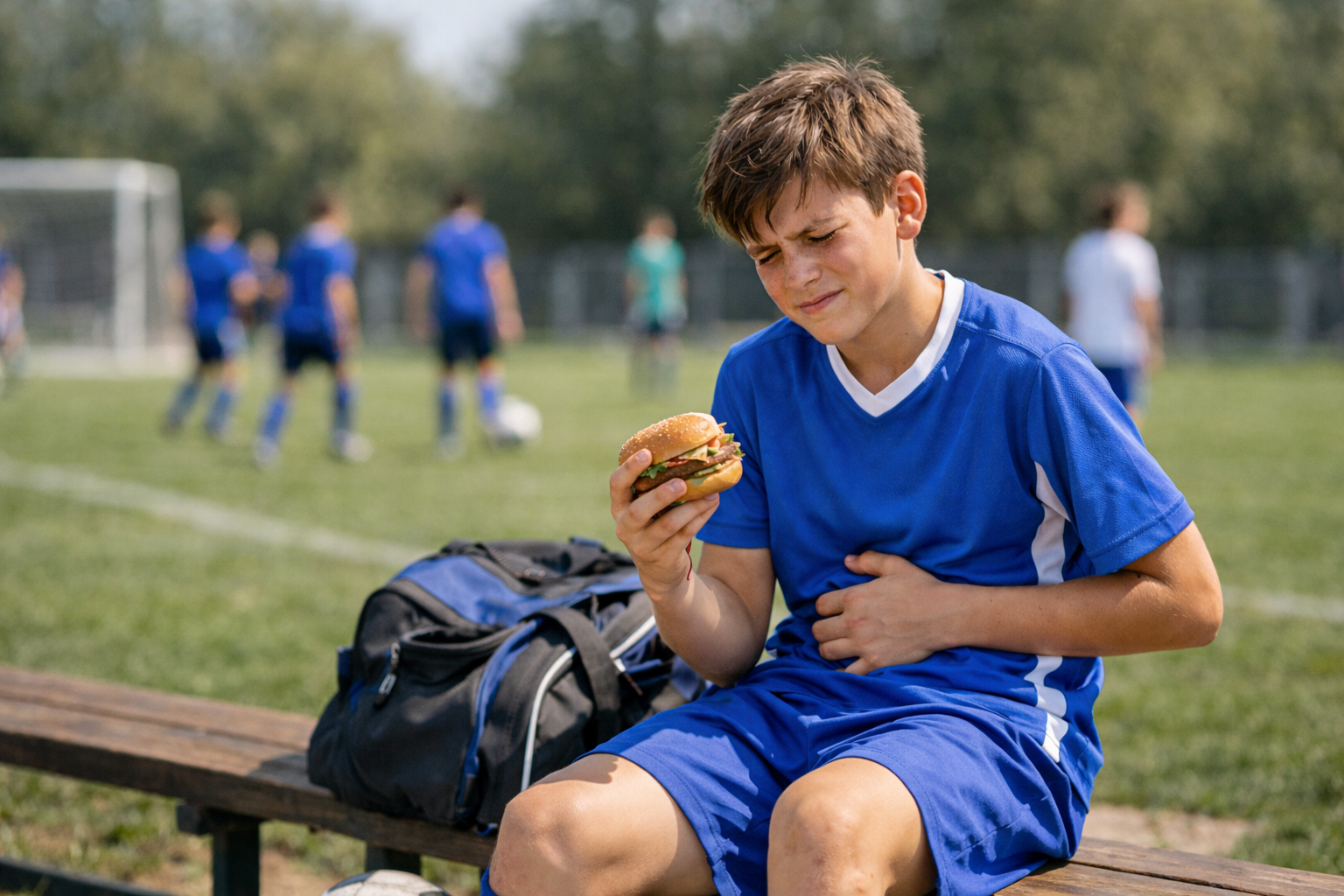
A Prematch Burger is NOT a Good Idea.
3. Trying Something New on Game Day
New protein bar. New energy drink. New supplement a teammate recommended.
Game day is not the time to experiment.
If a player hasn’t tested it during training, they shouldn’t test it before a match. Upset stomachs and mid‑game cramps are often the result of “trying something different.”
What to do instead:
Stick to familiar foods the body already knows how to handle.
4. Drinking Only Sports Drinks
In the Atlanta heat, hydration isn’t optional — it’s essential.
But loading up on sugary sports drinks without enough water can cause energy spikes and crashes.
Hydration also doesn’t start on game day — it starts the day before.
Players should be consistently drinking water throughout the entire day leading up to a match, especially in Georgia’s heat and humidity. Waiting until the morning of the game (or worse, right before warmups) is too late. By then, you’re already playing catch-up.
At the same time, chugging large amounts of fluid right before kickoff isn’t the answer either. Drinking too much immediately before a game can leave players feeling heavy and uncomfortable.
What to do instead:
Drink water steadily all day the day before the game
Continue hydrating the morning of the match
Prioritize water first
Use electrolyte drinks strategically during high heat or multiple games
Sip — don’t chug — in the hour before kickoff
Hydration is an all-day process — especially in Atlanta — not something you fix five minutes before kickoff.
5. Eating Too Close to Kickoff
A full meal 30 minutes before warmups is a recipe for discomfort.
Large meals should be eaten 2–3 hours before a match. Closer to kickoff, think small and simple.
Smart pregame snacks:
Banana
Applesauce pouch
Small granola bar
Yogurt, fruit and granola
The goal is to feel light, fueled, and ready to move.
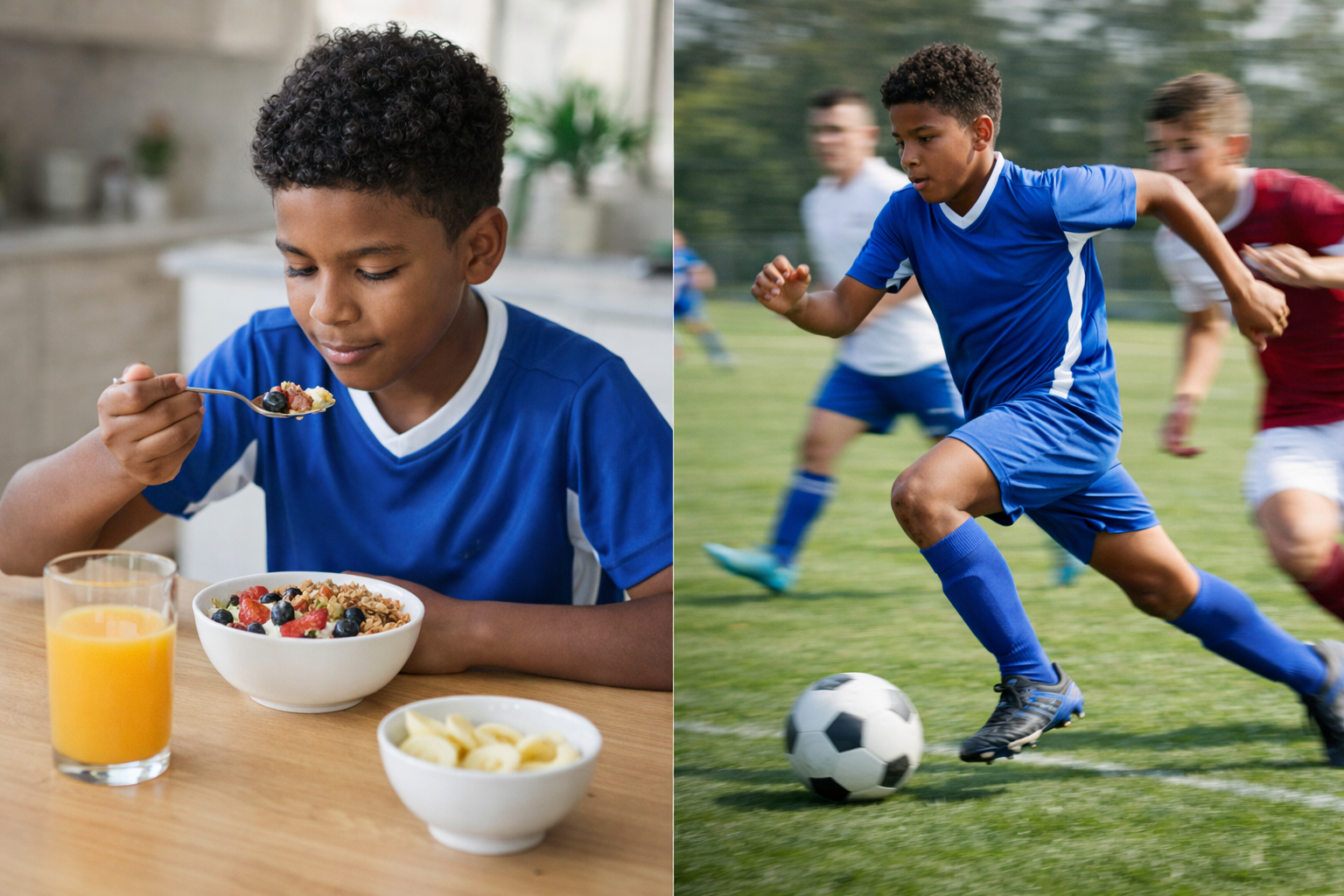
Yogurt, Fruit and Granola Can Be Pregame Jet Fuel.
6. Not Planning for Travel Games
Away games and out-of-town tournaments add another challenge — long car rides, early departures, and limited food options.
When players travel without a plan, they often end up relying on gas stations, fast food, or skipping meals altogether.
What to do instead:
Pack fuel just like you pack cleats.
Easy travel-friendly options (car travel):
Turkey or peanut butter sandwich in a cooler
Bananas or apples
Individual oatmeal packets (just add hot water)
Greek yogurt in a small cooler
Trail mix (light on candy)
Granola bars you’ve already tested in training
Large reusable water bottle
If you’re flying to a tournament, planning matters even more. Airport food can be limited and expensive, and long travel days can lead to dehydration.
Smart plane-friendly options you can pack or find easily:
Peanut butter sandwich (check airline guidelines)
Protein bar you’ve used before
Mixed nuts or trail mix
Pretzels or whole-grain crackers
Beef or turkey jerky
Fresh fruit purchased after security
Large bottle of water bought after security (sip consistently during the flight)
Air travel is dehydrating, so players should drink water steadily during the flight — but avoid chugging large amounts at once. Small, consistent sips are better than trying to “catch up” right before landing.
If you know you’ll be on the road for several hours, plan your meal timing the same way you would at home — 2–3 hours before kickoff for a full meal, light snack closer to game time.
Fueling properly isn’t complicated — but it does require intention.
Whether you’re playing in Atlanta heat or traveling across the state for a tournament, preparation makes the difference.
At Inter Atlanta, we talk about preparation in every aspect of the game. Training, recovery, mindset — and yes, nutrition.
Small adjustments before kickoff can lead to sharper focus, stronger starts, and better performances.
Plan ahead. Fuel smart. Compete at your best.